
May 21, 2026
Understanding Male Pattern Baldness
Male pattern baldness explained: causes, signs & treatments including finasteride, minoxidil & FUE.

Male pattern baldness explained: causes, signs & treatments including finasteride, minoxidil & FUE.
Male pattern baldness, also known as androgenetic alopecia (AGA), is the most common type of hair loss among men. It affects millions worldwide, with its occurrence with age at, being present in nearly 8 in 10 men over 70 years. While the condition is not harmful to physical health, it can significantly impact self-esteem and psychological well-being. Here, we delve into the causes, mechanisms, and treatment options for male pattern baldness to help you better understand this condition.
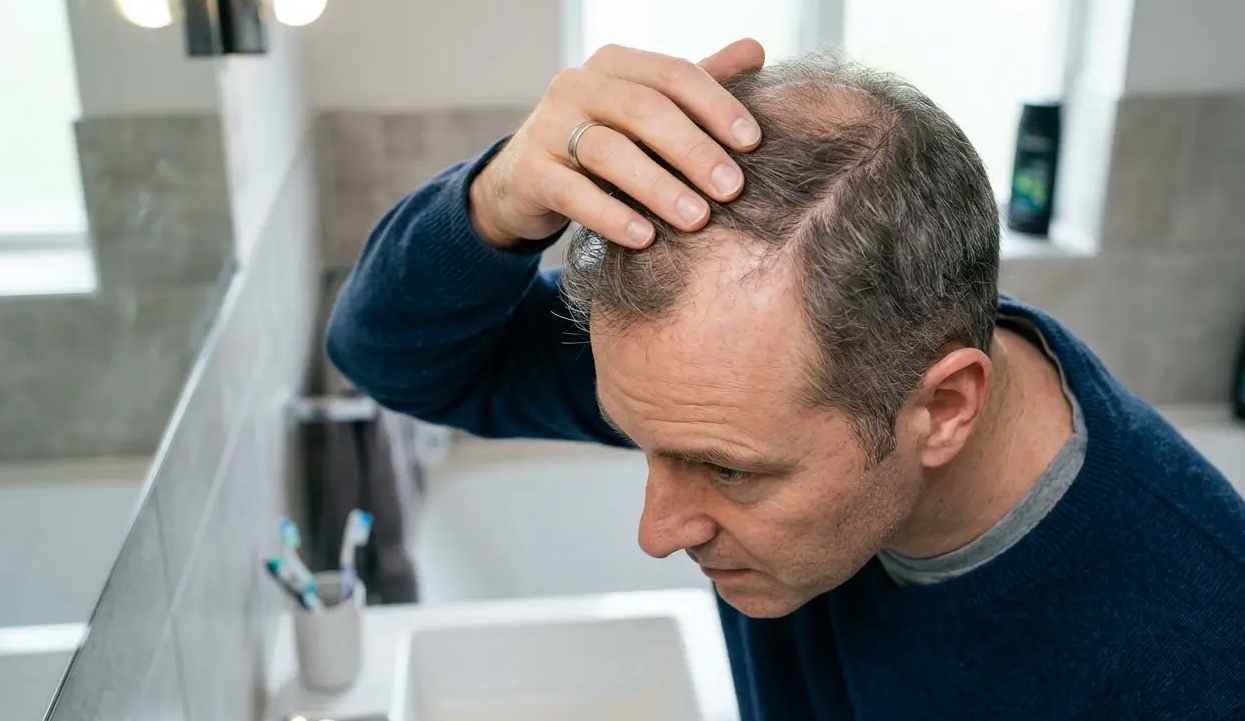
Male pattern baldness is a genetic condition that causes the progressive thinning of hair, primarily affecting the temples, crown, and mid-frontal scalp. Over time, the thick, pigmented hairs known as terminal hairs gradually transform into much finer, lighter vellus hairs. This process, called miniaturisation, happens slowly and often goes unnoticed at first, but as more and more terminal hairs are replaced by vellus hairs, the thinning becomes more visible, eventually leading to baldness in affected areas.
The rate at which this transformation occurs, as well as the age at which it begins, can vary significantly from one person to another. These differences are primarily influenced by a combination of genetic predisposition—meaning the traits inherited from your family—and hormonal factors, particularly the impact of androgens like dihydrotestosterone (DHT).
The root cause of male pattern baldness lies in DHT, a byproduct of testosterone. DHT binds to hair follicles, causing them to shrink and produce thinner, shorter hairs. Eventually, the follicles stop producing hair altogether.
Hair loss typically follows a predictable pattern:
The condition is also influenced by genetics, with several genes, including the androgen receptor (AR) gene, playing a role. Unlike traits that are inherited from just one parent, research suggests that hair loss follows a polygenic inheritance pattern. This means that genetic factors from both the maternal and paternal sides of the family contribute to a person's likelihood of experiencing hair loss, making it a more complex process than simply inheriting a single "baldness gene."
Male pattern baldness is typically diagnosed based on the characteristic pattern of hair loss and patient history. In some cases, dermatologists may use a dermatoscope to examine hair follicles closely. Advanced tools like scalp biopsies or blood tests are rarely needed but may be used to rule out other causes, such as alopecia areata or nutrient deficiencies.
While male pattern baldness cannot be cured, several treatments can slow its progression or even promote regrowth. These include:
1. Medications
2. Hair Transplantation
For advanced cases, hair transplant surgery can restore hair by relocating follicles from the back of the scalp (which are resistant to DHT) to balding areas. Modern techniques like follicular unit extraction (FUE) ensure natural-looking results with minimal scarring.
3. Emerging Treatments
Research is underway on new therapies, such as:
Hair loss often has a profound psychological impact. Many men with male pattern baldness report feelings of reduced self-esteem, social withdrawal, and anxiety. Studies suggest that societal perceptions of baldness can exacerbate these feelings, making emotional support and counselling important aspects of managing the condition.
If you notice sudden or patchy hair loss, excessive shedding, or hair loss accompanied by redness, itching, or pain, consult a dermatologist. These symptoms may indicate other conditions requiring medical attention. With the right approach, you can manage male pattern baldness and maintain your confidence.


Explore our collection of 200+ Premium Webflow Templates